( Interview · Art )
NickyHodge
A painter of soaked and softened marks on raw canvas, on memory, scale and knowing when to stop.
Read
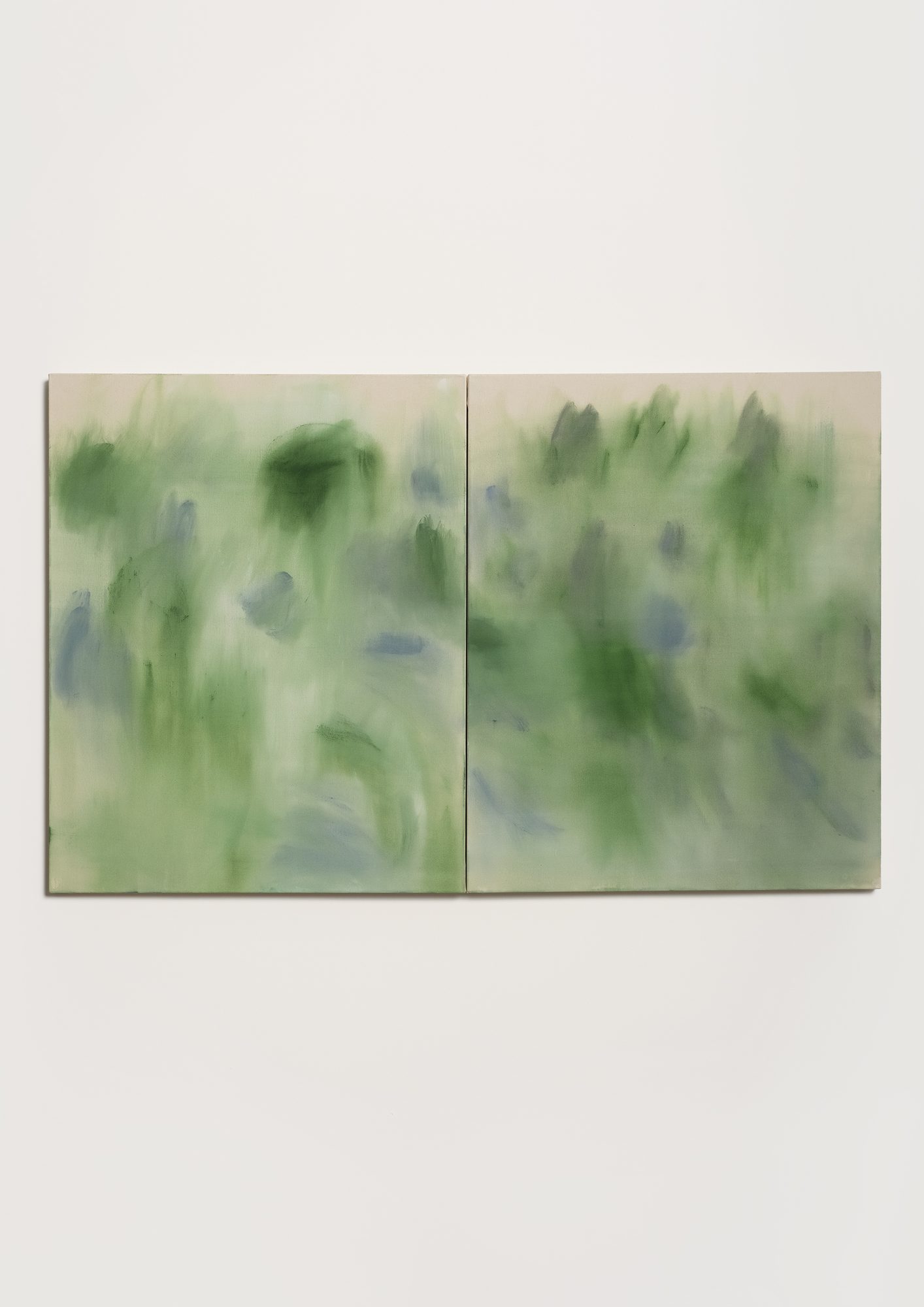
001–01Umbrage, 2025 · Courtesy Francis Gallery, photo Elizabeth Carabbas
Nicky Hodge paints on raw cotton duck, letting watered-down acrylic sink into the weave while it is still wet. The marks arrive fast, in a single sitting, and then soften under the brush until they sit somewhere between a gesture and the memory of one.
She lives in Bristol and works from a studio a short distance from her home. Here she talks about the long route to painting, knowing when to stop, and the dark four-panel work she has kept close.
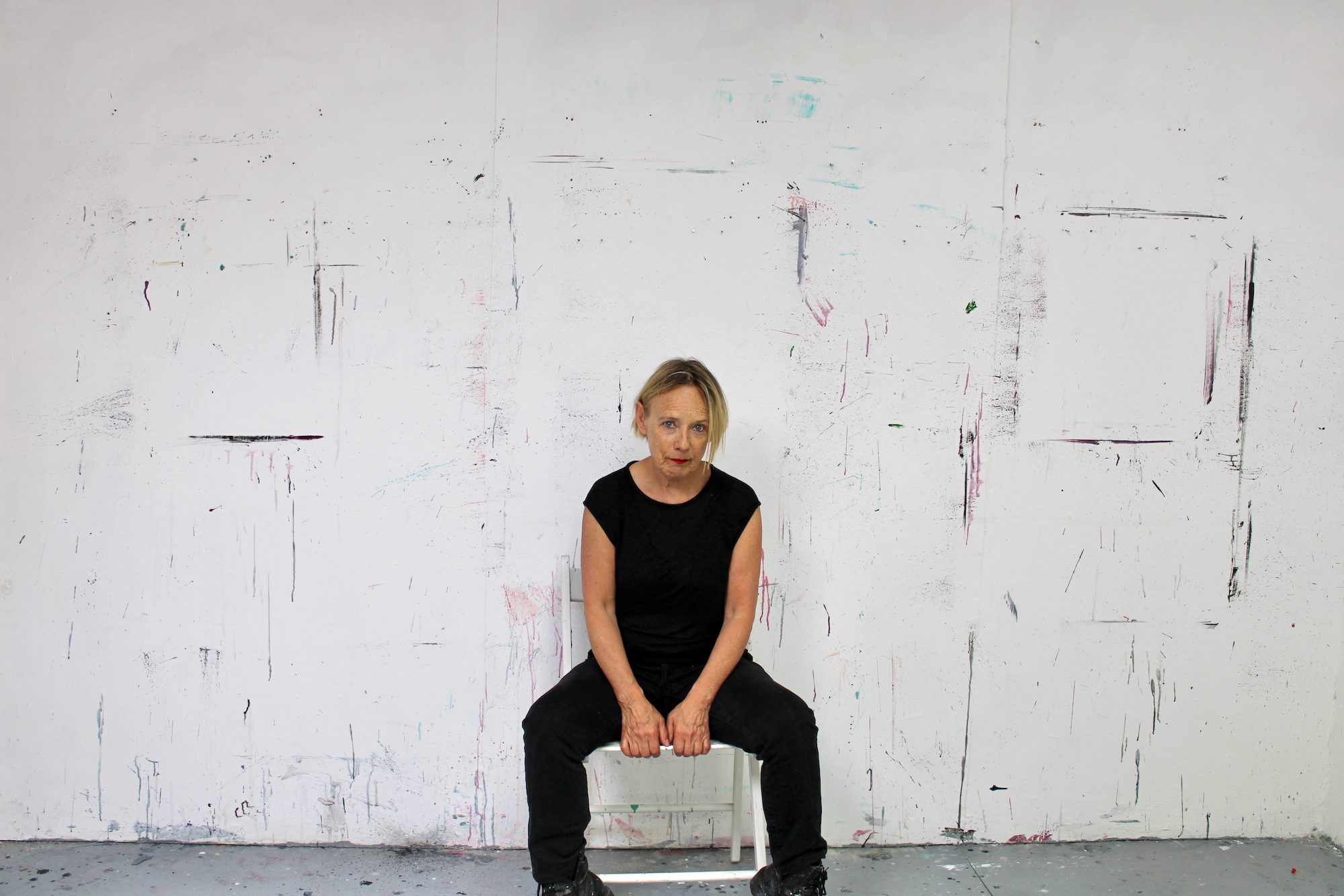
Please tell us a little about yourself—how did you end up painting, and what drew you to raw, unprimed canvas?
I think the moment that I won the annual school art prize at 18 was when I knew I wanted to be an artist. I actually took a circuitous route, taking up a university place to read English literature first, and finally getting round to doing a fine art degree in my 30s, after I had started drawing again. After college, I continued working in my studio on a series of small paintings, mainly oil on panel, mostly of landscapes based on Polaroids I took, where I deliberately blurred the image. These got selected for several exhibitions and led to further study at Goldsmiths, where I started to make larger paintings in acrylic, which in turn kickstarted my desire to become a full-time abstract painter.
So nowadays I mainly make abstract paintings and drawings using acrylic. I often paint directly on unprimed canvas and tend to use a smooth cotton duck that comes from Germany. My way of working is very spontaneous, intuitive and gestural, mainly using a wet-on-wet technique, allowing the watered-down paint to soak into the raw canvas.
Your marks seem to soften into something almost ethereal. Is there a feeling, or a memory, you keep returning to when you paint?
I am interested in the way that marks can either dissolve or at times be blurred by the use of a brush. I think this process does relate back to the landscapes I was making earlier in my practice, where it was important to me that nothing appeared to be too stark or overly present. I find that I am drawn to forms that are more ambiguous, almost barely there. It is a feeling of indistinctness that I think does relate to memory, perhaps allowing the viewer to supplement what is there (or not there) with their own particular memories and feelings.
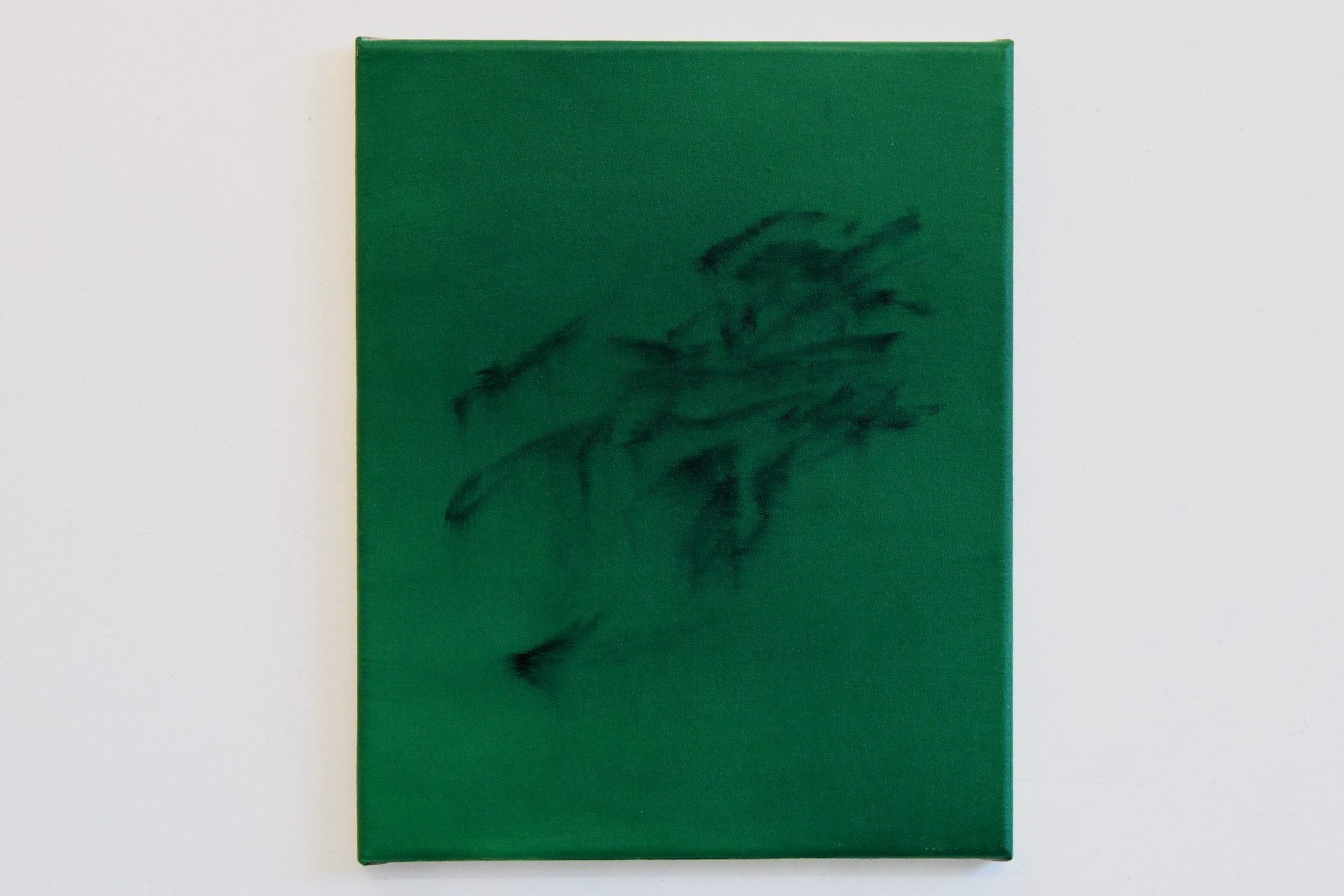
Gesture is quick, but your surfaces feel layered and slow. How do you know when a painting is finished?
Most of my paintings are made very quickly—always in one sitting. If it doesn’t work, I don’t try to salvage it or overwork it; I will start again on a new canvas. My particular gestural technique has been honed over the years and gives me the confidence to look at the painting and say: that’s it. Stop!
( Nicky Hodge )
“I find that I am drawn to forms that are more ambiguous, almost barely there.”
Your scale swings from very small works to canvases over two metres wide. How does size change the way a painting happens?
There is indeed quite a big shift in scale in my work. Because of where I started out, I have always been very comfortable making very small work, but equally have hugely enjoyed the rush of going big. Actually, I now plan to go bigger. The hardest size for me is the mid-range, as I think I am drawn to the intimacy of a very small work or the dramatic impact a very large painting can have.
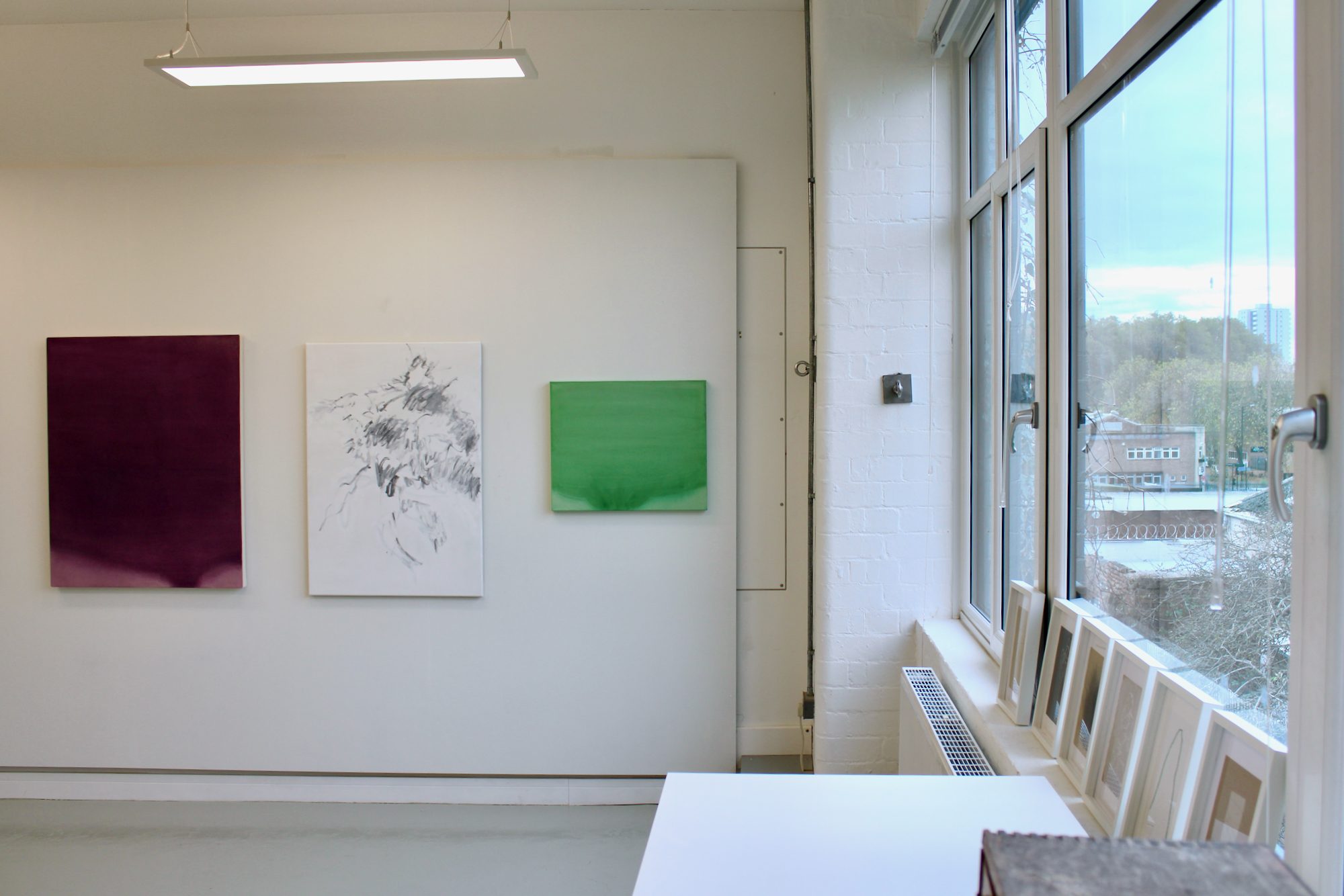
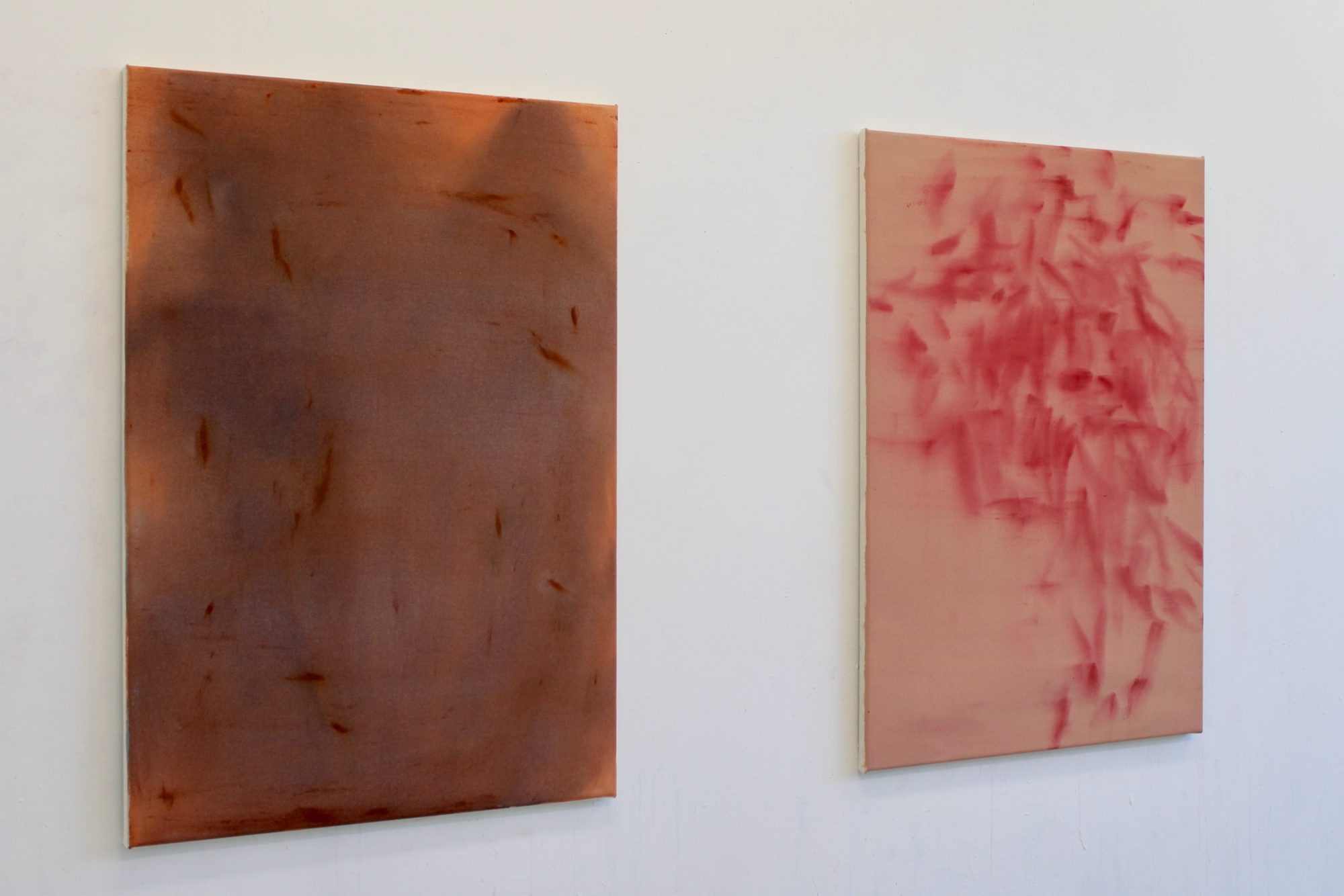
You move between acrylic, oil stick, watercolour and spray—how do you choose the material for a piece?
I have always been interested in and drawn to the idea of creating more than one image. It is perhaps in recognition of the fact that no one image can contain it all and that each painting contributes to the production of the whole, creating a body of work in which each relies on another for effect. I still often work with the idea of a series in mind and, within that, materials suggest themselves as being more appropriate to develop a particular idea. There are no set rules; the materials themselves often dictate the direction a body of work will take.
What’s in the studio right now, and is there anything coming next after Notes from Elsewhere and Touch Paper?
This is an exciting moment for me in the studio. On 25 November, I am opening a solo exhibition in Falmouth, UK, in the project space of a new gallery, Rough Hewn. I have developed a new series of small, ephemeral, mixed-media pieces (over 100 altogether). It is a very experimental work, and I am now packing it up and looking forward to seeing how it will play out once installed in the gallery.
I have also had it confirmed that I will be doing a residency at Fondation CAB in Saint-Paul-de-Vence, France, in January 2027, so I am getting ready in the studio for that now.
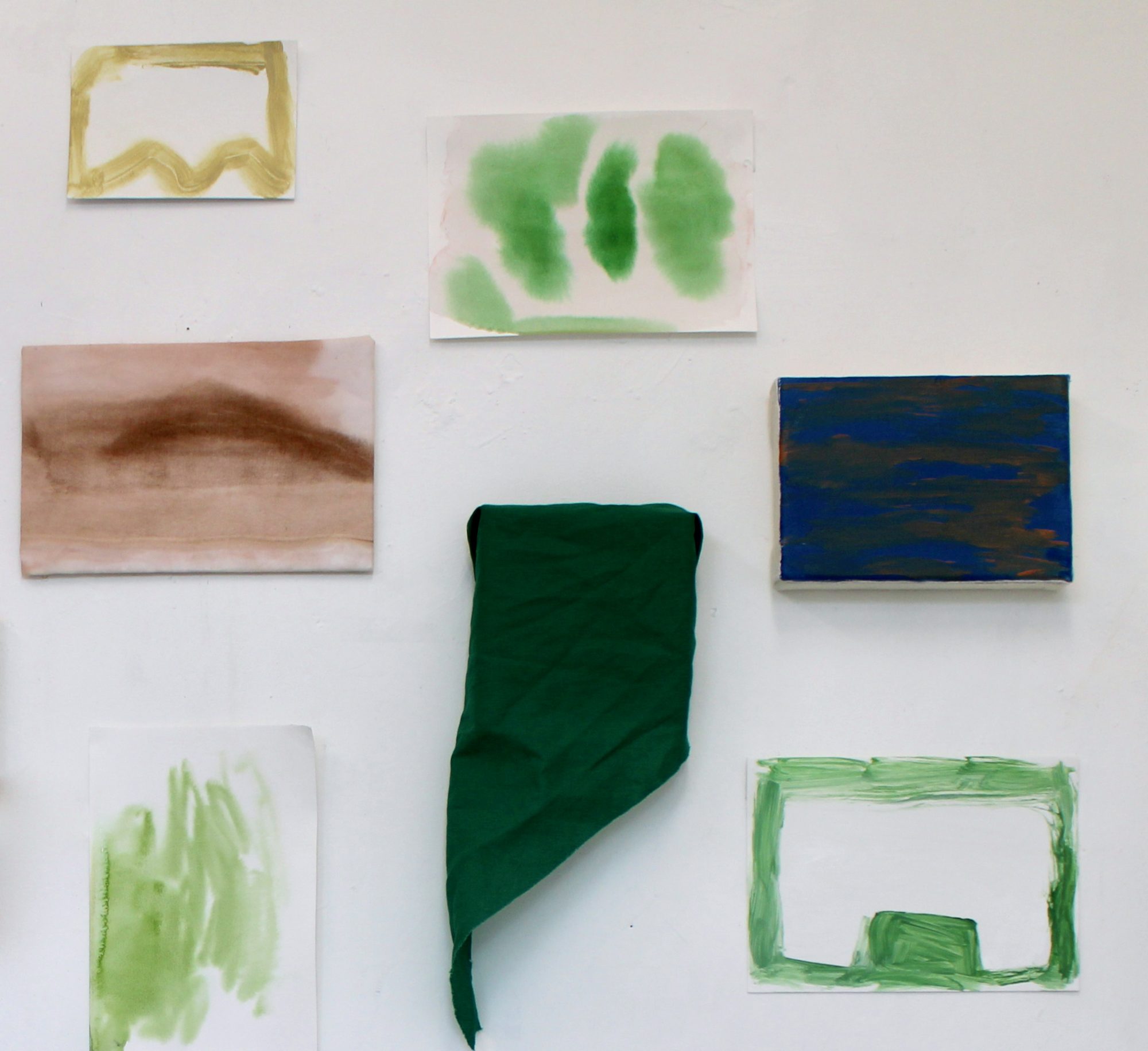
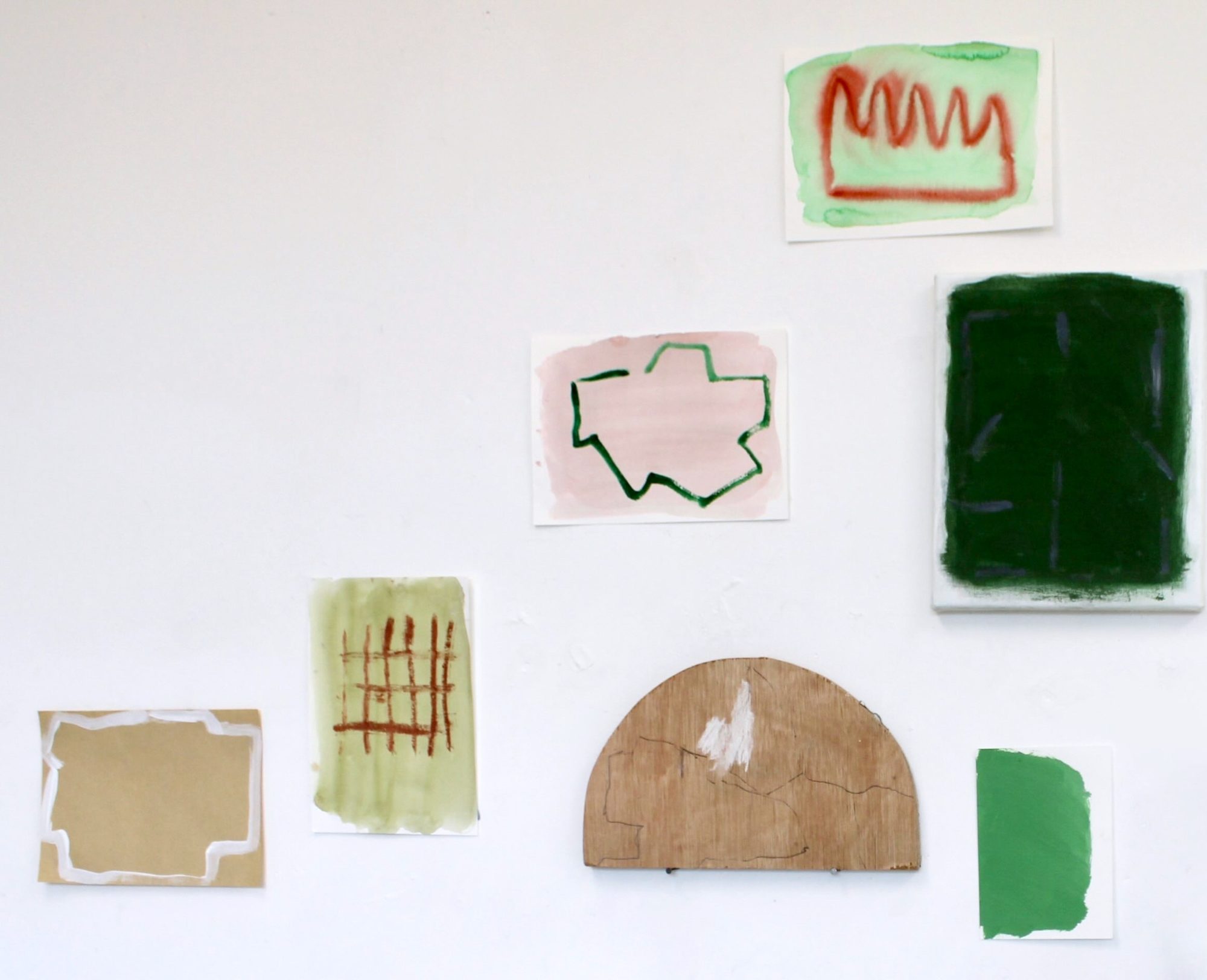
Is there a piece you’ve kept for yourself—one that never leaves the studio?
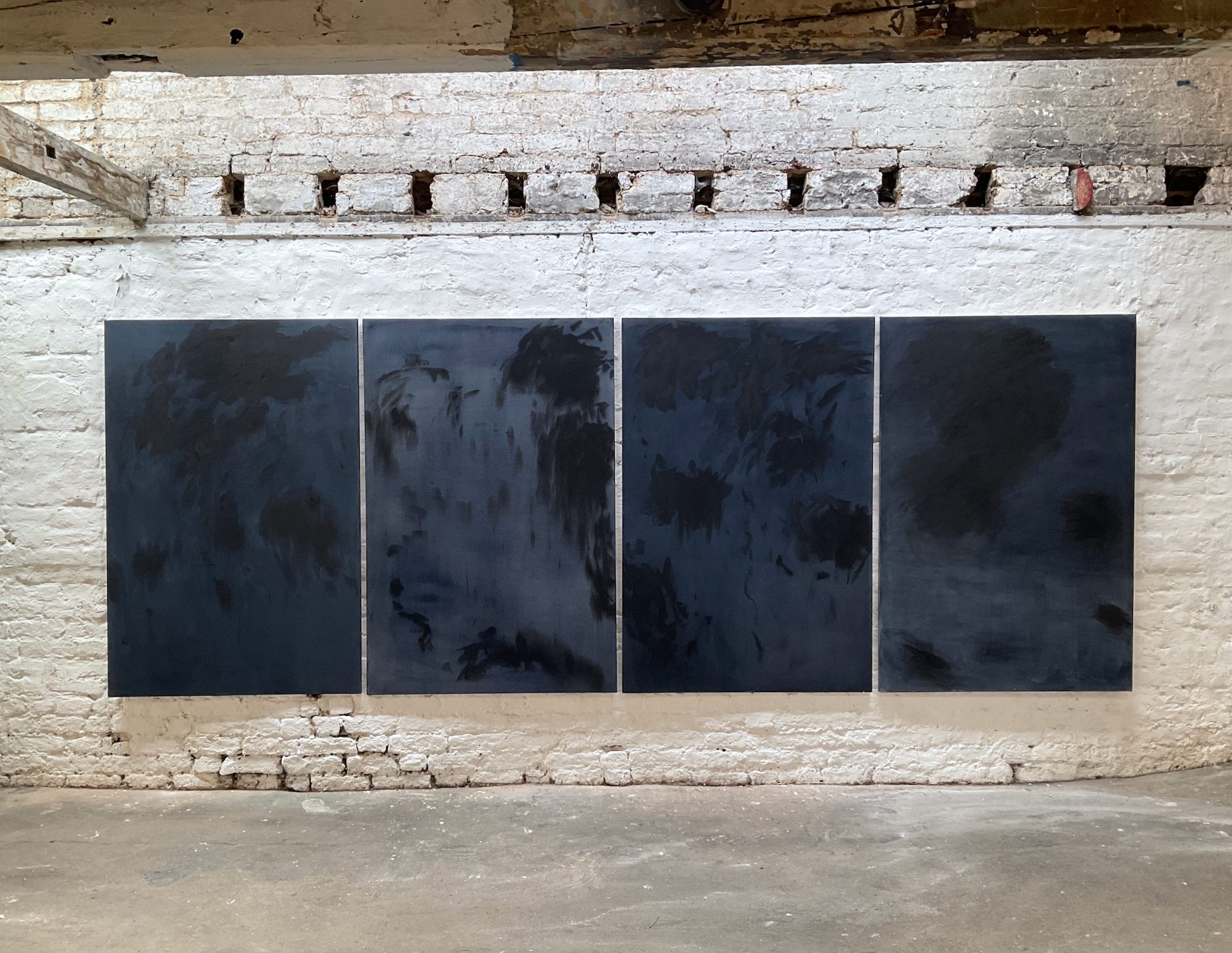
Actually, there is one piece that I have found hard to let go, partly because it is one of my favourite works. Titled the Ottoman series, it is a large, dark work spread across four 150 × 100 cm panels, featuring a cascade of black marks over a deep Payne’s grey.
Works shownCourtesy of the artist
001–01Umbrage, acrylic on canvas, 100 × 80 cm each canvas. Courtesy Francis Gallery, photo Elizabeth Carabbas2025
001–03Foible, acrylic on canvas, 50 × 40 cm2024
001–05Proxy (left) and Loosestrife (right), 100 × 70 cm each canvas2026
001–06–07Shoal, mixed media, two details. Rough Hewn Gallery, Falmouth, from 25 November 20262026
001–08Ottoman series, acrylic on canvas, 150 × 100 cm each panel2022