
The Watch You’ll Hand Down or Bury With You
What Lasting Watches Feel Like
Most watches pass through a life. They arrive, they serve their purpose, and eventually they leave, traded away or forgotten in a drawer. A few, however, never leave. They settle in as if they always belonged there. Their weight becomes familiar, their geometry inevitable, their silence reassuring. You stop imagining what comes next because you know nothing else will fit quite as well.
“Most watches are traded as easily as seasons change. A handful remain because they prove immune to fashion and function alike.”
These are the watches you keep forever.
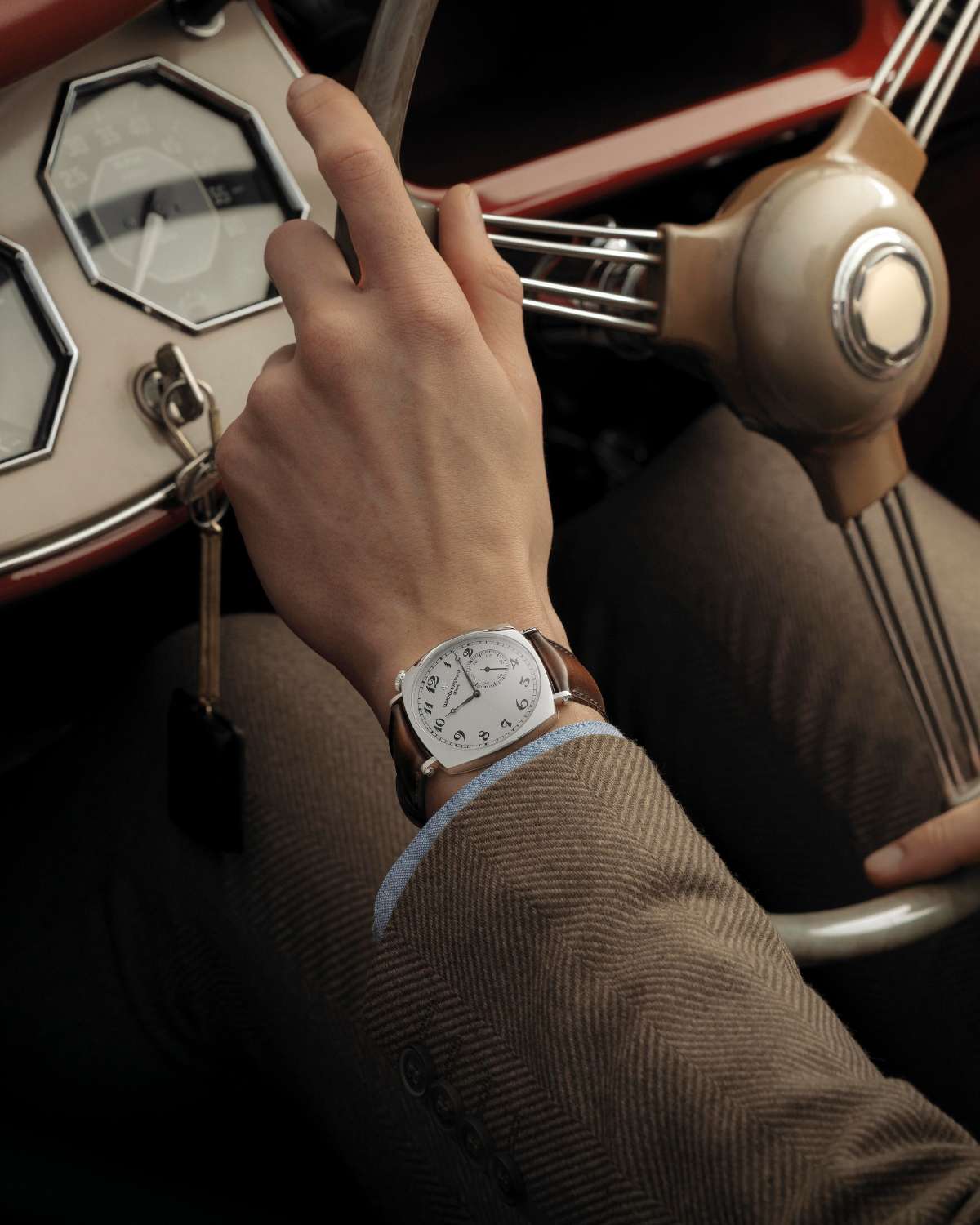
Vacheron Constantin Historiques American 1921, originally designed with a tilted dial for legibility while driving. Photo courtesy of Vacheron Constantin.
The Watches That Do Not Last
Understanding what endures begins with knowing what does not. Oversized cases that catch the light too loudly. Seasonal dials that glow in summer and look tired by autumn. Quartz novelties that tick predictably until the battery fades. They are built for a moment, and when that moment passes, they have nothing left to say.
Movements That Outlive Owners
The watches that matter are built around calibres that can be serviced indefinitely. They were not designed to impress with statistics but with architecture.
Consider the Lange 1815. Its calibre L051.1 beats at a deliberate 21,600 vibrations per hour, a slower pace chosen not for spectacle but for torque and stability. The German silver three-quarter plate will darken across decades, a patina only visible when the case back is opened, reminding every watchmaker who touches it that time has already passed through the movement.
The Omega Speedmaster Professional, particularly the Hesalite version, continues to use a hand wound movement that has changed little since the 1960s. Any competent watchmaker can still disassemble, clean, and reassemble it. The Rolex Explorer 1016 housed the calibre 1570, one of the most serviceable movements ever made, beating steadily across decades of expeditions and everyday wear alike.
“Watches like the Speedmaster or Explorer were never designed to impress. They were designed to be repaired.”
Watches like these are not built to be replaced. They are built to be rebuilt.
Materials That Tell the Story
A lasting watch does not remain pristine. It absorbs life and keeps a record of it.
Steel collects scars. Acrylic crystals cloud and polish clear again. Gold softens around the edges but never corrodes. Platinum resists almost everything, heavy in the hand and untouched by tarnish.
When Vacheron Constantin released the Collection Excellence Platine edition of the Historiques American 1921, the choice of platinum was intentional. A century after its odd asymmetrical dial was first drawn, platinum carried not flash but gravity. It was less about rarity than about weight, about a material certain to last long beyond its owner.
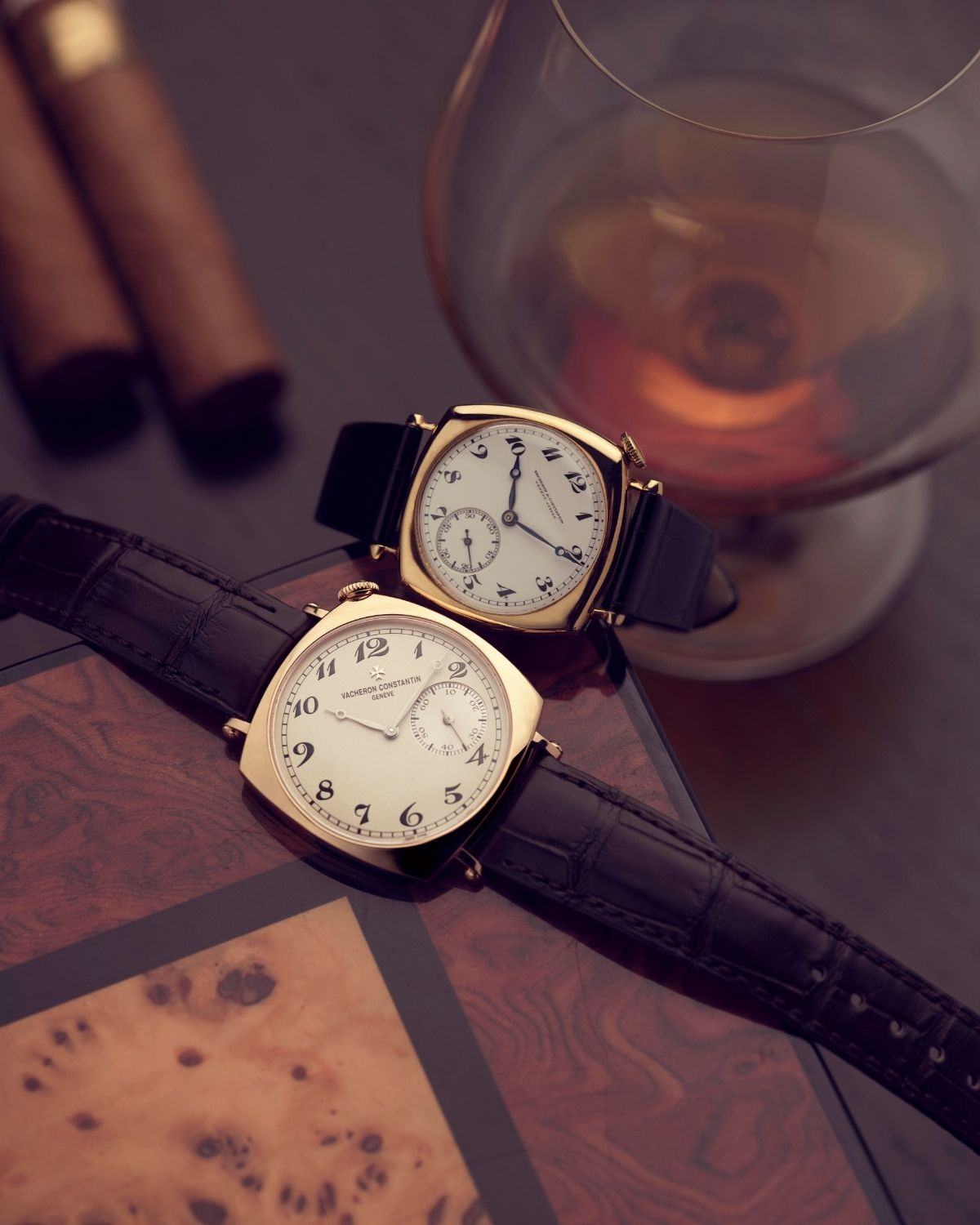
Vacheron Constantin Historiques American 1921 in gold. A century-old design that remains both eccentric and enduring. Photo courtesy of Vacheron Constantin.
Proportions That Refuse to Date
Geometry outlives fashion. Between 34 and 38 millimeters, with modest thickness and short, curved lugs, cases remain wearable across generations. These proportions dominated the middle of the twentieth century, and they still feel correct on the wrist today.
“Geometry outlives fashion. A 36-millimeter Explorer still feels correct half a century after it was drawn.”
The Naoya Hida Type 1C demonstrates this in the present. Its 37 millimeter case, engraved Breguet numerals, and heat blued hands could have been made seventy years ago, yet it is unmistakably modern in its restraint. Watches like this prove that correctness is timeless even when it is newly drawn.
Support That Extends Beyond You
Even the most carefully engineered movement fails without service. The difference between a watch that stays and one that disappears lies in whether parts and expertise remain available after decades have passed.
Patek Philippe continues to maintain pocket watches from the nineteenth century. Vacheron Constantin can restore references long out of production. Omega still carries catalogues that allow Speedmasters from the Apollo era to be serviced today. Rolex, despite its corporate scale, remains able to replace a balance staff in a 1960s Explorer.
This institutional commitment is as important as design. It ensures that a watch will remain alive even when its first owner is gone.
The Watches That Prove the Point
Rolex Explorer 1016
Produced for over twenty years, the 1016 defined what a tool watch should be. At 36 millimeters, with a matte dial and gilt text on early examples, it was never fashionable, which is why it still works. Collectors prize it not only for its Everest connection but for its refusal to age.
Cartier Tank Louis
Born in 1922 from Louis Cartier’s sketch of military armor, the Tank Louis has remained essentially unchanged for more than a century. Its thin case, Roman numerals, and brancards are as elegant now as they were then. Every rectangular watch made since has lived in its shadow.
Omega Speedmaster Professional (Hesalite)
The Speedmaster is often described as the Moonwatch, but its greater achievement may be its survival as a hand wound chronograph in a world of automatic convenience. The acrylic crystal scratches and polishes back, the calibre remains serviceable, and it is still accessible enough to be a first serious watch for many collectors.
Naoya Hida Type 1C
A modern atelier in Tokyo producing watches with proportions and craft from another era. Every numeral is hand engraved, every line disciplined. At 37 millimeters, it sits in the sweet spot of mid-century design yet represents the future of independent watchmaking.
A. Lange & Söhne 1815
The 1815 is less about appearance than engineering. The German silver plate, the hand finishing on bridges and screws, the deliberate frequency of the calibre — all are choices made for longevity rather than display. It is a watch that will not only outlive its first owner but the one after that.
Vacheron Constantin Historiques American 1921
First released in 1921, revived decades later, and now made in both gold and platinum, it remains one of the most unusual designs to survive a century unchanged. Its tilted dial is either eccentric or inevitable, depending on the eye of the wearer. Few watches carry so much history with such quiet authority.
When a Watch Becomes Yours
The watch that stays is not always the rarest or the most expensive. It is the one that enters your own story. The one worn during years of work, at the birth of a child, on a journey you will not forget.
At some point you stop thinking of it as an object. You check the time, but what you see is memory. The crown feels familiar between your fingers. The clasp carries marks that only you recognize. It is not simply a watch anymore. It is part of your life.
The real measure of a lasting watch is simple. If you no longer imagine what will replace it, it has already proven itself. If it feels less like something you wear and more like something you carry with you, it has already become part of your story.
“The watch you keep forever is not the rarest, not the most expensive, but the one that refuses to be replaced.”
That is the watch you keep forever.
Credits
For the imagery accompanying this article, we chose to feature the Vacheron Constantin Historiques American 1921 in different precious metals. While the text references other houses and their models, the visual thread remains anchored in this singular design.


The gallery includes the A. Lange & Söhne 1815, Cartier Tank Louis, Naoya Hida Type 1C, Omega Speedmaster Professional (Hesalite), and Rolex Explorer 1016.


