The Fall of Logos
In the early 2000s, a logo was not a flourish but a threshold. A monogrammed Speedy held within its pattern the entire vocabulary of Vuitton, a swoosh across a chest suggested that culture and commerce could be condensed into a single stroke, and two interlocking Cs at the hip could stand in for ambition, belonging, and desire all at once. These were not small embellishments; they were declarations made visible on the body, legible from a distance, meant to be read quickly and understood instantly. Branding was the grammar of aspiration, turning strangers into members of a temporary tribe, turning fabric into proof of access.
That language has receded. Among those most fluent in it, the conversation has grown quiet, then fallen still. The logo has not softened into subtlety, nor evolved into some gentler signal. It has, in many circles, disappeared.
From Signal to Silence
Branding once offered the comfort of clarity. A red box printed on cotton could mark entry into a culture of scarcity. A Birkin, always difficult to obtain, acted as a private key to a club whose rules were as strict as its waiting lists. A Goyard tote, with its hand-painted chevrons, seemed a softer gesture yet still participated in the same exchange of recognition.
But as with any language, once it becomes universally understood, it loses its force. Counterfeits flooded the market and blurred the line between access and imitation. Social media multiplied exposure, turning what had been discreet codes into global billboards. Resale platforms reduced rarity to liquidity, transforming objects into assets that could be traded, measured, and flipped. Logos, once the clearest of signals, became noise.
“Logos, once the clearest of signals, became noise.”
And so those who had occupied the center—stylists, editors, collectors, investors, people who built careers on knowing the codes—began to step away. They no longer dressed to be identified; they dressed to disappear from the visual chorus. Yet disappearance is not quite the word. What emerged was not invisibility, but refinement: a refusal to speak in obvious terms, and the cultivation of a new, quieter lexicon.
The Post-Hype Persona
This new class is not uniform, yet patterns can be traced. Some are veterans of ateliers, who know what design looks like when it is still pinned to muslin, long before a collection takes form. Some are collectors, fatigued by the endless rotation of collaborations and drops. There are architects and gallerists, whose eyes have been trained on proportion and space, and there are creative directors who translate aesthetics across disciplines as easily as across wardrobes. Others are people who made money quickly and now prefer to spend it in ways that leave no trace.
They do not post their outfits. They do not measure relevance in likes or mentions. You might find them in a handspun linen shirt woven in Kerala, or in a cashmere coat made to order in Naples, garments chosen not because they announce themselves, but because they do not.
“They dressed not to be identified, but to disappear from the visual chorus.”
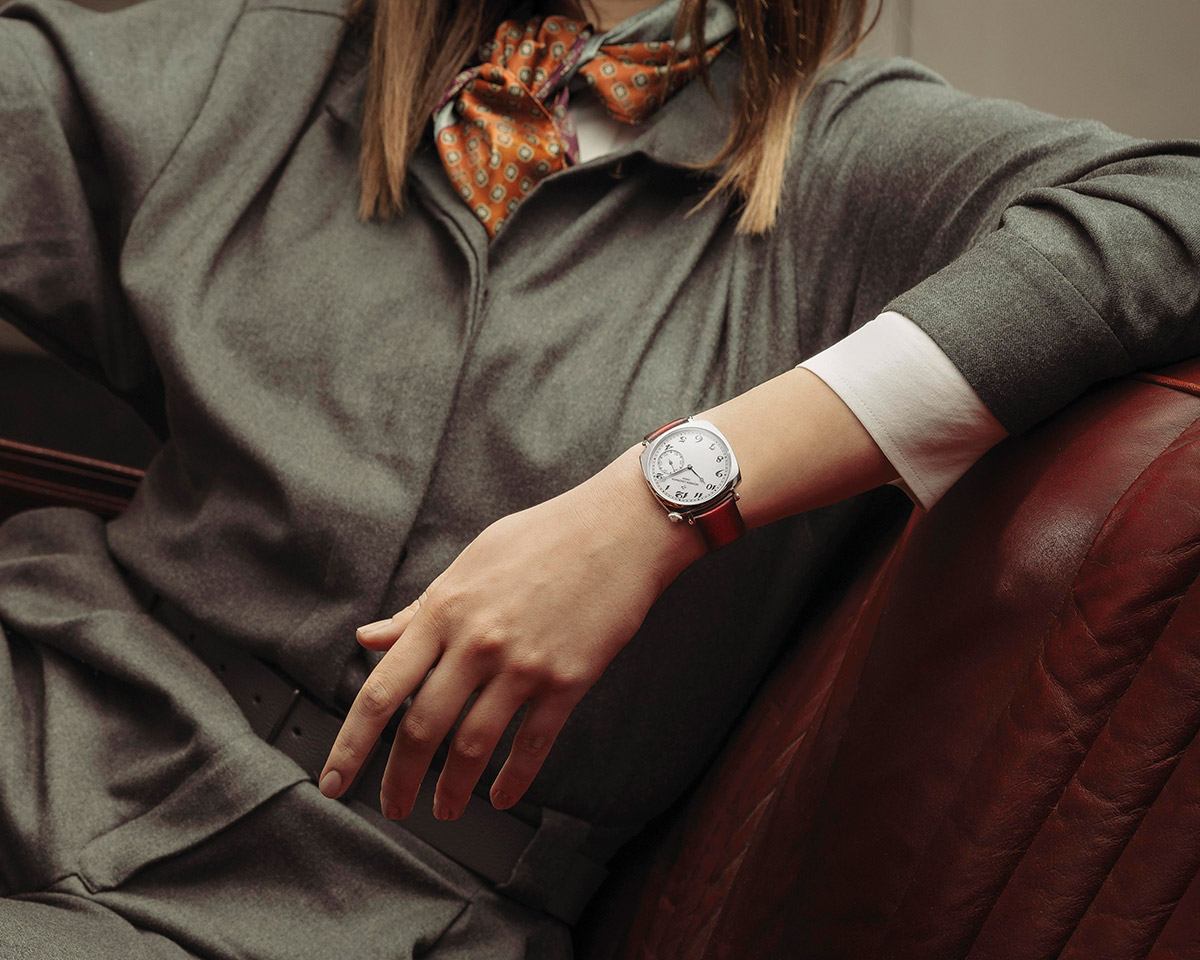
Their wrists carry watches made by independent makers who accept so few commissions that each order feels like a private conversation. They wear old Celine, but avoid the recognizable silhouettes that became too widely known. They find artisans whose names are absent from Google, and they commission clothing from patternmakers who never cared to advertise. Even sneakers, when they buy them, might be stitched by hand in Japan or made by a friend in Mexico City who works leather by touch and intuition. What repeats in their wardrobe is not logo, but quality.
What Replaces the Logo?
If the visible mark no longer occupies the place it once did, what now signals identity? The answer arrives in three layers: material, provenance, and gesture.
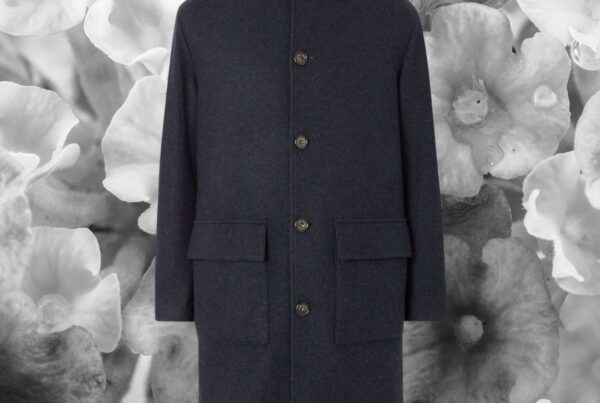
Material reveals itself first, not in cost but in texture, memory, and movement. Belgian linen that relaxes against the skin, its softness deepening with wear. Cotton woven by hand, its slubs uneven yet deliberate, carrying the rhythm of the loom in its threads. A double-faced wool coat balanced so perfectly it requires no lining to hold its shape. These are signs that are felt before they are seen, and they cannot be replicated at scale.
“These are signs that are felt before they are seen.”
Provenance follows, not as marketing copy but as cultural currency. A scarf woven on antique shuttle looms in Lyon by a family who has practiced the craft for generations. Trousers cut by a former Yamamoto assistant in Kyoto, a man who only accepts a handful of clients each year. A dress made in a village where the dyeing process still depends on seasonal weather. The story matters, but only in the way that a key matters to a lock—it is not about price, but about traceability, and about the certainty that no one else at the dinner table will be wearing the same piece.
Gesture is the most intimate layer, the one that resists replication entirely. The shirt buttoned only to the second placket, a collar left unpressed, the jacket worn too large and sleeves pushed up in the unstudied way of someone at ease. These gestures are not performance, but the absence of it. They suggest a familiarity with clothing that does not need to be shown, only lived.
Style Without a Billboard
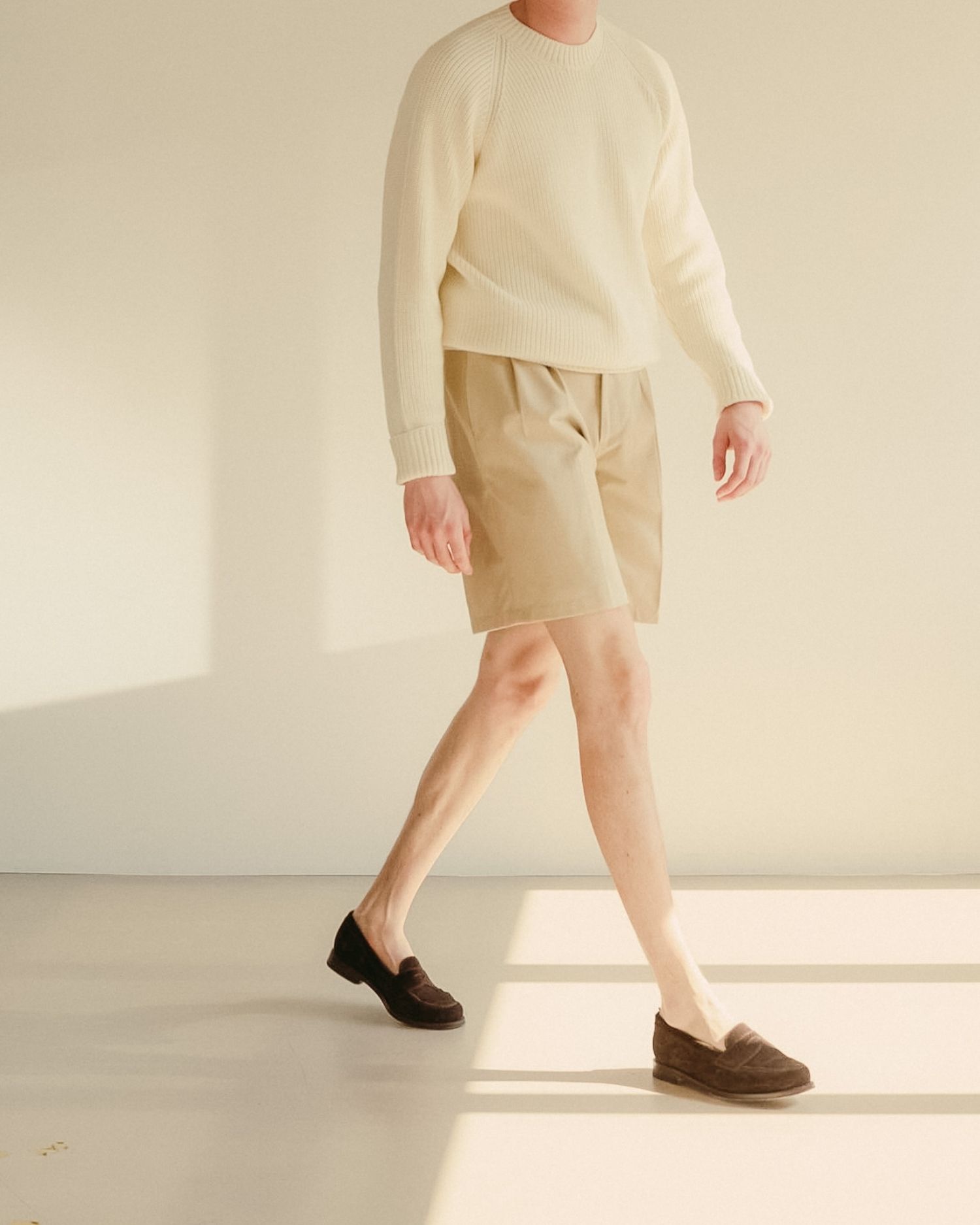
To call this turn minimalism would be misleading. It is not about reduction, nor about having little. It is about possession of pieces that speak in lower tones, pieces that reward the patient eye rather than clamoring for it. A lapel becomes the headline, a muted palette allows proportion to rise, and a garment offers recognition only to those willing to look closely.
People who share this sensibility recognize one another not by labels but by feel: a suede shoe of a certain make, a leather bag without hardware, a coat length rarely found in ready-to-wear. These are signals, but they are not democratic. They are signs meant for the few who know how to read them.
The Economics of Obscurity
Paradox lies at the heart of this retreat. For all its refusal of overt status, the post-logo aesthetic can be more exclusive than the culture it left behind. It requires not only money, but access to knowledge, patience, and time. Many of these garments never appear online. Some are never formally sold. Entry into this world is often a matter of years spent building the right relationships, of knowing the right makers, of being trusted enough to be invited.
Where a logo once offered instant belonging, this system offers slow admission. You are recognized not for what you own, but for what you understand. The rules have changed, but the game continues.
“You are recognized not for what you own, but for what you understand.”
Brands in Transition
For major houses, the shift is unsettling. How does a fashion brand thrive when its most discerning clients prefer to erase its name?
Some respond by investing in material innovation, commissioning obscure consultants, and releasing whisper collections that carry no label, no store presence, and little marketing beyond the object itself. Others lean into the logic of the collectible, offering archival reissues, limited handmade runs, or bespoke services that create intimacy with long-standing clients. A small number of diffusion labels experiment with discretion, though most remain tied to the visibility of their marks. At the same time, young designers sometimes resist the urge to brand at all, releasing collections without tags, without campaigns, without announcement. Their work circulates by hand, and often only within a narrow circle.
Where It Goes From Here
The fall of logos does not erase the culture of brands, but it shifts the meaning of status. The movement is from overt to covert, from mass visibility to private recognition, from the billboard to the nearly invisible signal passed quietly from one connoisseur to another.
Fashion will likely fragment further into small, almost hidden communities, where clothing is exchanged among friends or made in numbers so limited it disappears as soon as it is created. For those attentive enough, the new language is already written into seams and silhouettes, into the hang of a trouser, the finish of a button, the balance of a coat.
Most will not see it. And that, perhaps, is the point.