Autumn Elsewhere: A Guide
By the time the avenues of New York are littered with their last golden leaves, when the Bois de Boulogne glimmers faintly in Parisian mist, and London’s squares have turned to muted bronze, there are corners of the world where autumn has only just begun to stir. These are not the obvious destinations that call out with color, spectacle, or the promise of harvest festivals. Their allure is subtler, for those who wish the season to stretch a little further, who prefer its hush to its blaze, and who find beauty in a quieter passage of time.
This guide is not for the seeker of peak foliage, but for the traveler content with a lingering warmth in the air, an afternoon that invites a glass of wine outdoors without haste, a dusk that falls late enough to extend the conversation another hour. It is for those who already know the season in their own city and wish, instead of leaving it behind, to follow it elsewhere—to see how it settles differently across landscapes and cultures.
Alentejo, Portugal
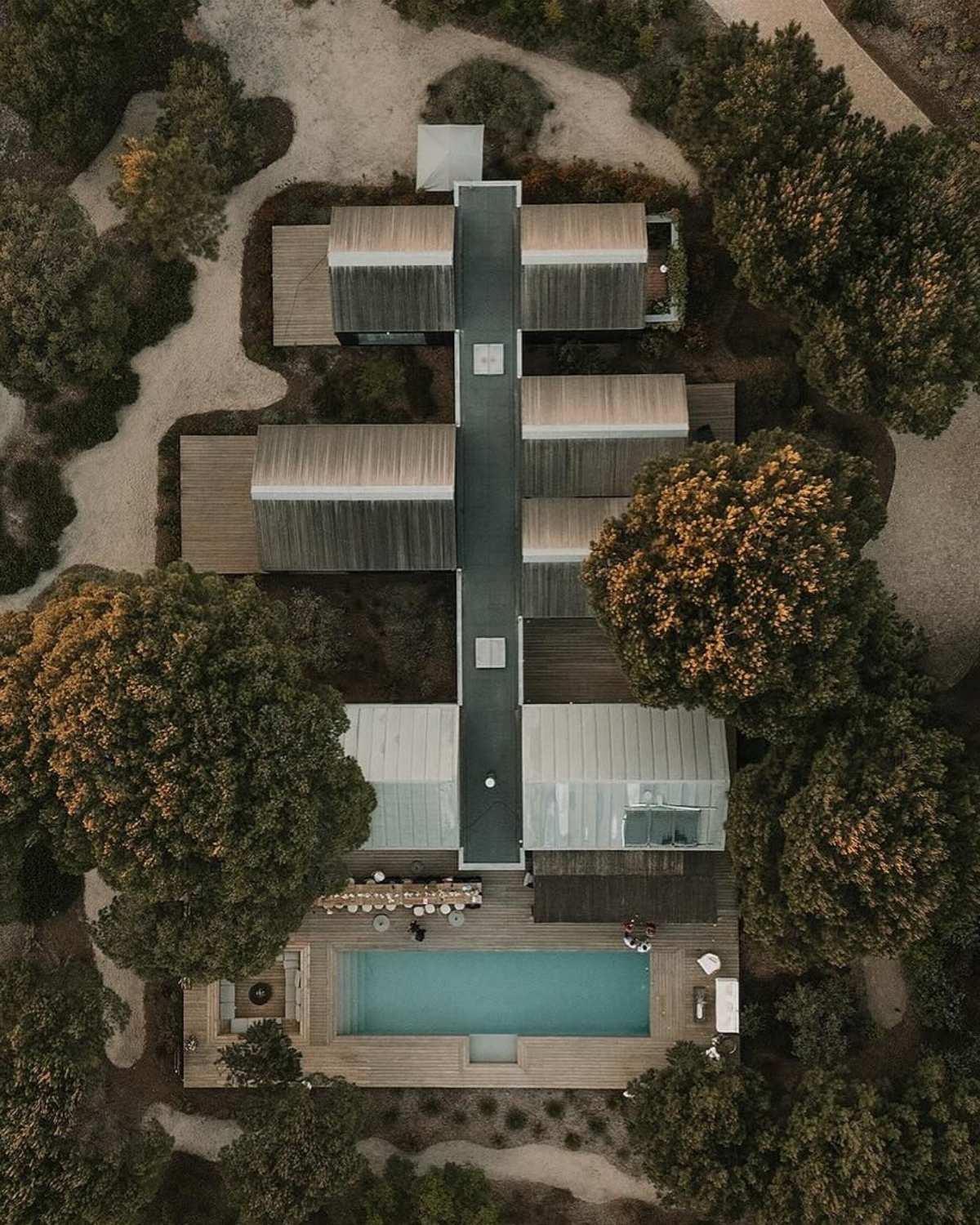
Two hours east of Lisbon, the landscape opens wide into ochre plains dotted with cork oaks and olive groves. By late October the days are still long, the evenings scented with woodsmoke, and the rhythm of life unhurried. Guests often choose discreet estates such as São Lourenço do Barrocal, where whitewashed farmhouses have been reborn as suites and dinner is served with wines drawn from the property’s own vineyards. It is a place not for spectacle but for exhale, where a glass of red in the courtyard carries the season more fully than any calendar of events.
Umbria, Italy
If Tuscany has grown too familiar, Umbria’s hills remain understated, a geography of monasteries and medieval towns that turn inward as the air cools. Autumn here lingers in the muted greens of the olive harvest and the quiet glow of vineyards preparing for rest. To stay at Reschio Estate is to enter that rhythm—to wake to fog rolling across the valley, to taste truffles shaved over eggs at breakfast, and to spend an afternoon on grounds that preserve both wilderness and elegance.
Andalusia, Spain
When summer’s intensity fades, Andalusia in November feels almost newly revealed. The plazas of Seville are animated but unhurried, the palaces and courtyards open without distraction, and the light falls across Moorish arches with clarity. At Hacienda de San Rafael, a former olive estate outside the city, the day unfolds between bougainvillea gardens, shaded pools, and evenings warm enough for dinner outdoors yet softened by the season.
Kyoto, Japan
The late season here unfolds slowly, with temple gardens turning copper and vermilion as December approaches. Unlike spring, when blossoms draw crowds, autumn belongs to those who prefer reflection—travelers who find in moss gardens and tea ceremonies an atmosphere of continuity with centuries past. At Hoshinoya Kyoto, where rooms open to the river and forested hills rise behind them, the experience of the season is immersive: silence, color, and tradition layered one upon the other.
Crete, Greece
While northern Europe has closed its shutters, Crete still carries warmth in its air and in its seas. The beaches are nearly empty, the tavernas open, and the landscape—mountains meeting olive groves meeting water—feels expansive. Guests who return to Amanzoe on the Peloponnese often use it as a gateway to Crete itself, where mornings are spent swimming in clear water, afternoons among ruins, and nights stretched on candlelit terraces that seem to belong to summer and autumn at once.
Mendoza, Argentina
When the northern hemisphere leans into frost, the southern hemisphere turns toward spring. Yet in Mendoza, set against the Andes, there is a season that feels like autumn renewed: vineyards alive with labor, air tempered by altitude, and a sense of scale found only where mountain and plain converge. At Cavas Wine Lodge the days move easily between tastings, walks in the vines, and evenings cooled just enough to call for a fire.
A final thought
For those who live in cities where autumn passes quickly—measured in a handful of weeks, a few dinners outdoors, a short stretch of evenings before the cold arrives—there is a certain pleasure in knowing it can be found again elsewhere. Not in the obvious places or the celebrated ones, but in landscapes that allow it to arrive on their own terms. To follow autumn is not to chase a season, but to lengthen it—to let it linger in the spaces between departure and return.